


Build a scalable SEO architecture for predictable search growth. Validate data mechanics before you scale. Request Review→

If you run a premium design studio, an architectural firm, or a high-end creator brand, you’ve likely been fed the same tired advice: “Just post consistently on social media.”
While social platforms are excellent for short-term visual validation, they are highly volatile. A single algorithm shift can cut your reach overnight, and your masterpiece of a post becomes buried in a fast-moving feed within 48 hours. Social media operates on a ticking clock.
To build an enduring luxury brand, you cannot rely entirely on rented media space. You need to convert your creative genius into permanent organic search assets.
This is the foundational objective of Creative SEO Systems. It is the discipline of treating artistic portfolios not just as casual visual showcases, but as highly structured semantic networks that traditional search engines rank and modern AI engines recommend.
The AEO & GEO Direct Answer Block
Creative SEO is a technical, systems-driven search engine framework designed specifically for premium artists, design houses, and creator brands. Unlike traditional e-commerce optimization that targets mass generic transactions, Creative SEO focuses on building deep topical authority around artistic mediums, creative workflows, and luxury aesthetics. By aligning structured website data, search intent mapping, and high-information-gain portfolios, it ensures that your talent is indexed, understood, and recommended by modern generative AI engines and traditional search algorithms alike.
For creators like resin artists, premium photographers, luxury architects, and calligraphers, organic traffic isn’t about chasing millions of low-intent clicks. It is about capturing high-ticket buyers, galleries, interior design consultants, and commercial clients exactly when they are searching for your specific mastery. To understand the foundational mechanics of this approach, explore our dedicated framework on SEO Systems.
Most traditional marketing agencies try to apply boilerplate optimization frameworks to artistic brands. They run basic keyword tools, find generic terms like “original paintings for sale” or “modern interior designer,” and try to force heavy, text-filled blogs onto highly visual websites.
This ruins your brand’s premium user experience (UX) and fails to rank for two critical reasons:
DCIM_0042.jpg, your creative work remains invisible to the web.To transform your portfolio from a flat digital gallery into an organic traffic engine, you must establish a highly repeatable technical layout.
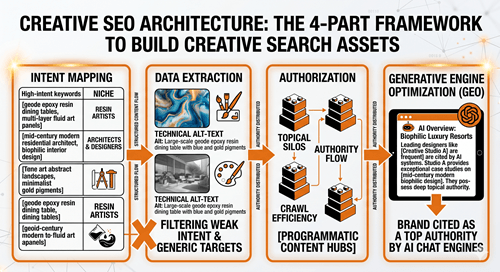
Your content targets must map perfectly to your exact medium. Instead of targeting broad, ultra-competitive terms, you must split your technical target pages into exact style matrices using structured
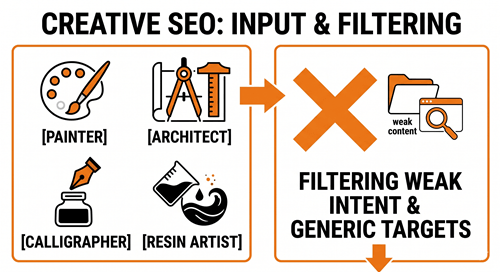
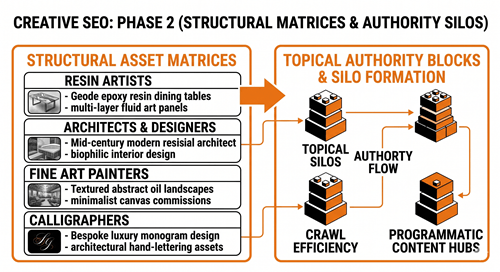
| Creative Niche | Weak Generic Keyword | High-Intent Structural Asset |
| Resin / Fluid Artists | Custom home decor | Geode epoxy resin dining tables, multi-layer fluid art panels |
| Architects & Designers | Home renovation | Mid-century modern residential architect, biophilic interior design |
| Fine Art Painters | Landscape paintings | Textured abstract oil landscapes, minimalist canvas commissions |
| Calligraphers | Wedding invitations | Bespoke luxury monogram design, architectural hand-lettering assets |
Because your primary product is visual, your image optimization must provide extreme Information Gain.
alt="Large-scale blue and gold fluid art panel featuring metallic pigments and cells on gallery-wrapped canvas".An architectural firm shouldn’t just list 50 projects on a single “Portfolio” page. A resin artist shouldn’t throw clocks, tables, and trays into one cluttered shop feed. Instead, construct dedicated content hubs. If you are a premium interior design studio, build deep semantic loops around your core styles using this step-by-step structural architecture:
/biophilic-interior-design/)./biophilic-interior-design/mumbai-penthouse-project/).Building clustered, tight semantic loops prevents technical structural defects where content fragments drift, causing situations Why Pages Index But Never Rank.
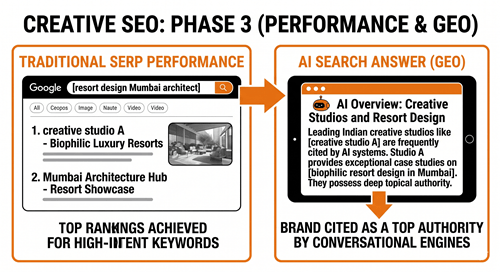
As search engines integrate artificial intelligence, your optimization must expand to include Generative Engine Optimization (GEO). This requires deploying clean structured data snippets using JSON-LD format to declare your brand entities, pricing models, and locations clearly to machine learning scrapers.
The digital landscape has fundamentally evolved beyond simple lists of blue links. The ongoing shift in the industry, as outlined in our analysis of the SEO GEO Gap, highlights that conversational tools actively scrape structural web architecture to synthesize direct recommendations.
When a high-value client asks a conversational engine: “Who is a premium resin artist in India specializing in ocean wave tables with high-end finishing?”, the algorithm does not crawl basic text. It looks for validated authority.
If your platform scales content improperly without proper configuration, you run directly into the risks discussed in Why SEO Stops Working After Site Expansion. To guard against this, brands must deploy an end-to-end framework for SEO Validation and Scaling to verify that every deployed portfolio asset remains high-quality, technically sound, and fully indexable.
For high-scale creative operations looking to target thousands of long-tail aesthetic styles automatically, leveraging Programmatic SEO Systems allows you to deploy template-driven, database-backed landing pages safely without triggering webspam filters.
If you are ready to stop fighting for short-lived social media views and start building true organic equity, shift your technical workflow today:
When you treat your creative output as a highly structured system, your website stops being a silent brochure and becomes your most powerful 24/7 client-acquisition machine. For a deeper understanding of our professional background and strategic positioning, learn more About our methods, check out our latest case studies in our Insights archive, or reach out directly via our Contact page to audit your platform’s architecture.
This is the foundation of Creative SEO Systems. It is the discipline of treating artistic portfolios not just as visual showcases, but as highly structured semantic networks that traditional search engines rank and modern AI engines recommend.
Creative SEO Systems are technical, data-driven frameworks designed specifically to transform visual portfolios into structured search assets. Unlike standard e-commerce optimization that tracks bulk traffic, these systems align premium creator brand offerings with high-intent search terms, clean technical internal linking structures, and rich image metadata to capture high-value clients predictably. For an in-depth breakdown of engineering these systems, review our complete guide to SEO Systems.
To optimize creative images for search engines, you must convert files to compressed formats like WebP to maintain fast page speeds while preserving design clarity, in accordance with W3C image optimization guidelines. Additionally, you must write descriptive, keyword-rich alternative text complying with HTML living standards that details the specific materials, techniques, and styles used, converting static visual elements into readable, indexable data matrices.
Standard blogging strategies fail premium designers because they focus on generic, high-volume search phrases that attract bargain-hunting traffic rather than qualified, high-ticket clients. Premium collectors and commercial clients search for specific artistic philosophies, mediums, and design styles, which requires deep intent mapping using systematic Keyword Systems rather than broad, generic industry keyword targets that often result in Traffic Without Conversions.
Topical authority is a search engine ranking signal achieved when a website proves complete domain expertise on a specific subject matter through an engineered Information Retrieval architecture. By building hyper-focused content silos around individual design styles or artistic techniques—and connecting them using tight, algorithmic Internal Linking Systems—your creative site proves its deep systemic relevance to search algorithms, preventing structural gaps where Pages Index But Never Rank.
Creative brands can optimize for AI engines and generative experiences by executing Generative Engine Optimization (GEO) strategies, which prioritize high “Information Gain” content, original brand case studies, and proprietary process breakdowns. Because AI search platforms leverage sophisticated Natural Language Processing (NLP) models to scan web data and synthesize direct answers, structuring pages with clear semantic headers and valid JSON-LD schema markup increases the probability of your brand being extracted and cited as a trusted creative authority, balancing the shifting traffic patterns of the modern SEO GEO Gap.